

Voices in Touch Newsletter: The Current State of Somali Childcare Providers in King County
Stay up to date on policy and advocacy topics affecting your work in Olympia, King County, and Seattle.
At a Glance:
Somali childcare providers are a crucial part of King County’s early learning system, especially for immigrant and low-income families. In late 2025, national political rhetoric and viral social media videos created a sense of fear that has directly affected Somali providers. Many now feel under scrutiny simply for who they are, which disrupts both their work and the families who rely on them. The Policy and Advocacy Department sent out an anonymous survey to Somali childcare providers who have been targeted to hear directly from them, and their responses gave us insight into what they have been experiencing.
The Rundown:
In early December 2025, the public attacks on Somali immigrants by President Trump initiated scrutiny toward Somali communities by linking immigration to crime and fraud. This rhetoric amplified collective blame to quickly spread beyond Minnesota to places like Washington and Ohio, negatively impacting Somali childcare providers across the country.
A widely shared video alleging fraud in Minnesota childcare programs furthered these stereotypes, portraying Somali-run childcare centers as fraudulent. Even after state officials found no fraud in the highlighted cases, the video had already gone viral and shaped public perception across the country.
Shortly after, journalists and online social media influencers began visiting Somali-run childcare providers in King County, often filming or posting encounters online. Providers reported being contacted, questioned, and monitored simply because of their identity, creating a climate of fear and distrust.
From the Somali King County Provider survey we conducted, one anonymous provider stated “A YouTuber came to my childcare center posing as a prospective parent and attempted to record the facility and staff without consent while claiming to be conducting an investigation”. Another shared “Random people come to our home and knock our doors demanding to see children in the childcare. These people have no right to enter childcare facilities with out proper consent. We are afraid for our safety and the safety of our children under our care”. These were two of many stories of being watched, questioned, or unfairly singled out.
Impact on Providers and Families:
When we asked if the providers have felt unsafe, targeted, or isolated following their interactions with unwelcomed visitors, one provider mentioned “Yes, we were scared at 8:00 pm. A man walking with a backpack and a gun came to our house. We didn’t open the camera. We saw him and he put his hand in his pocket. We thought he had a gun. Until now, the fear has increased. We were worried. We called the police. They said, “Shut the door, the students are still talking. ‘He looks like an angry man’.”
Some other testimonies included “Yes I feel unsafe because people are coming my place and harassing me”, “Yes. Being targeted with false reviews and people showing up with cameras made me feel unsafe and singled out, like I was being watched and judged simply for who I am and the work I do” and “I didn’t believe anyone happy what happened our country”. These responses have proven to have caused a great deal of trauma and fear to providers while also affecting their ability to care for children and run their programs safe and effectively.
The increased scrutiny has caused disruption for Somali childcare providers who are licensed and operating legally. Some have also shared having temporarily closed their childcare programs, leaving families without care. Additionally, 76% of the participants confirmed their families expressed fear, confusion, or concern about childcare because of what they’ve seen in the media.
Why this Matters:
Protecting Somali childcare providers means protecting childcare access for working families in King County. We are asking for policies and oversight that reject discriminatory narratives and focus on fair, evidence-based practices that support entire communities rather than harm.
Following the ongoing targeting of Somali childcare providers, Voices of Tomorrow has made it our priority to address the concerns of the injustice happening. We sent out communications in large WhatsApp group chats with over 600 Somali providers and assistant teachers to keep up with the concerns and thoughts. In addition, we hosted a larger community listening session on Zoom for providers that opened the space for feedback and covered what providers should know. DCYF Licensors were also in attendance to facilitate the discussion and answer questions.
We are committed to dismantling the stereotypes and harmful discrimination against Somali providers in King County. Our mission is to create equitable systems for all refugee and immigrant communities. The work we do will always continue to center their safety, work and access to resources.

Voices in Touch Newsletter: 2025 Policy & Advocacy Highlights
Stay up to date on policy and advocacy topics affecting your work in Olympia, King County, and Seattle.
At a Glance
2025 was a year of collaboration, advocacy, and growth for the Policy and Advocacy Department at Voices of Tomorrow. Our work centered on elevating the voices of parents and childcare providers, ensuring that policies and programs reflect the needs of immigrant and refugee families in King County. This year, we focused on building community engagement, understanding early learning policy systems, and working to achieve equity in childcare. We executed this by furthering our work in our Policy and Advocacy Councils, hosting community forums with local providers, and collaborating with key figures in the legislative childcare sector. Throughout this year, we made significant progress and are excited to share some of the highlights of this year.

Provider Advisory Council
The Provider Advisory Council is made up of local King County Childcare providers that are passionate about making a difference in their childcare. These providers have a direct voice in learning about legislatives policies and regulations that impact their businesses, children, and families. The council is also a space to help strengthen VOT’s advocacy efforts by providers sharing any relevant concerns and questions with us.
During meetings, we provide updates on current bills, discuss tips on family engagement in the classroom, and give DCYF agency updates. Our meeting schedule is 2 hours once a month, virtually on Zoom. Together, the Provider Advisory Council is a group of informed, dedicated providers who actively contribute to the betterment of childcare in King County. We are grateful for a successful year with the Provider Advisory Council and look forward to continuing this important work in the year ahead.
If you are interested in joining the Provider Advisory Council, feel free to contact Asha at [email protected] or call: 206-360-9002.
Parent Policy Council (PPC)
The Parent Policy Council is a space for parents of our ECEAP programs to actively participate in decisions affecting their children’s education, development, and well-being. It strengthens advocacy & leadership and ensures that parent perspectives guide program decisions. The council convenes based on school year terms from September to June. All parents are invited to join, with each classroom having a minimum of 1 representative for a balance of perspectives in the council. The council meets once a month on zoom or in person with different discussion-centered topics. The topics are decided by parents-based interests and program needs. Some of the topics discussed this year were Health and Nutrition, Extracurricular Activities, and Kindergarten Readiness. These topics were well received by parents and it gave them insight into the core of their child’s program. In addition, we provide advocacy 101 trainings for parents to gain a basic understanding of what it means to be a parent policy council member and how to amplify voices in the classroom.
At VOT we are passionate about parent involvement and advocacy in early learning at any level. We believe that there is no better advocate for the needs of their child than their parents. Council members are also given the space to have real-time feedback and ideas that are implemented for the betterment of the program. We look forward to continuing the year with the Parent Policy Council and building the community of parent policy champions.
Community Café
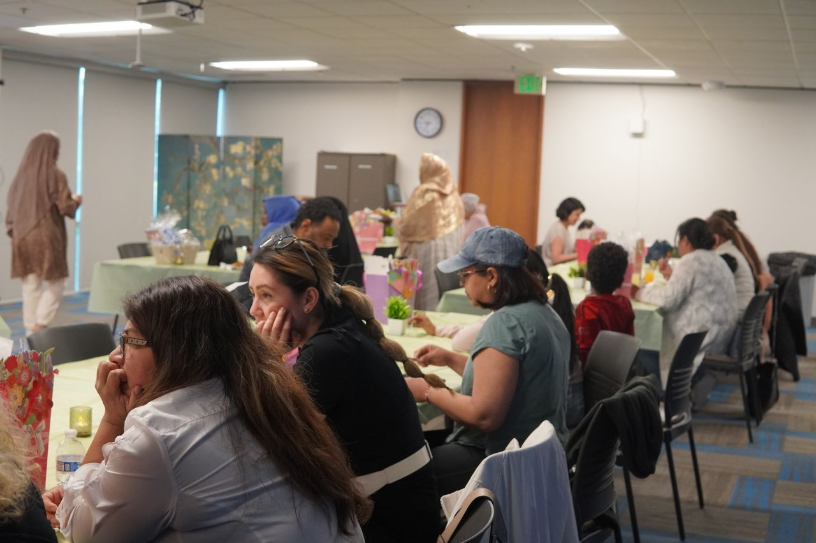
Community Cafe was created in 2022 as a space intended for childcare providers to receive policy updates, ask questions, and share challenges related to licensing, compliance, and their overall business. This year, we continued its mission by hosting additional meetings that engaged providers through conversation-centered discussions.
In 2025 we convened 2 meetings both with over 100 providers in attendance. Providers were given the opportunity to share their concerns and receive feedback and resources in real time with the policy specialist in PAD. Recently, the PAD department collaborated with DCYF to share some of their agency updates and policy changes. The DCYF team provided insights into new regulations, upcoming initiatives, and shared resources available to support providers. In addition, these meaningful discussions gave our department direct insight that assisted us in informing our childcare advocacy priorities. As we continue to host these spaces in real time, we also send surveys in multiple languages quarterly to ensure that all provider voices are received.
Provider Circle
In September 2025, Voices of Tomorrow introduced a new forum named Provider Circle. A space where local providers connect face to face with political candidates running in their district to have honest, solution-centered conversations about their experiences and challenges they are facing in their childcare programs. These conversations highlighted the realities of running childcare programs while also building relationships rooted in trust, listening, and collaboration.
Two Provider Circles were convened in 2025, the first was with King County District 5 Councilmember Steffanie Fain. For this meeting, we brought together providers from cities that Steffanie serves in her district, Des Moines, Kent, Normandy Park, Renton, Sea-Tac, and Tukwila. Providers shared touching stories about staying open through the COVID-19 pandemic, staffing shortages, and financial strain. Providers also highlighted the lack of investment in South King County and the current housing instability pushing families and providers out of their homes due to renting.
The second Provider Circle brought Seattle-based providers together with Seattle Mayor Katie Wilson, where conversations focused on workforce shortages, rising operational costs, the need for facility grants, and the uncertainty of operating family childcare programs in rental and public housing.
Together, these conversations reinforced the urgent need for investment in childcare, stable affordable housing, and policies that reflect the lived realities of providers who continue to care for the children in their communities.
External Advocacy & Advocacy Day
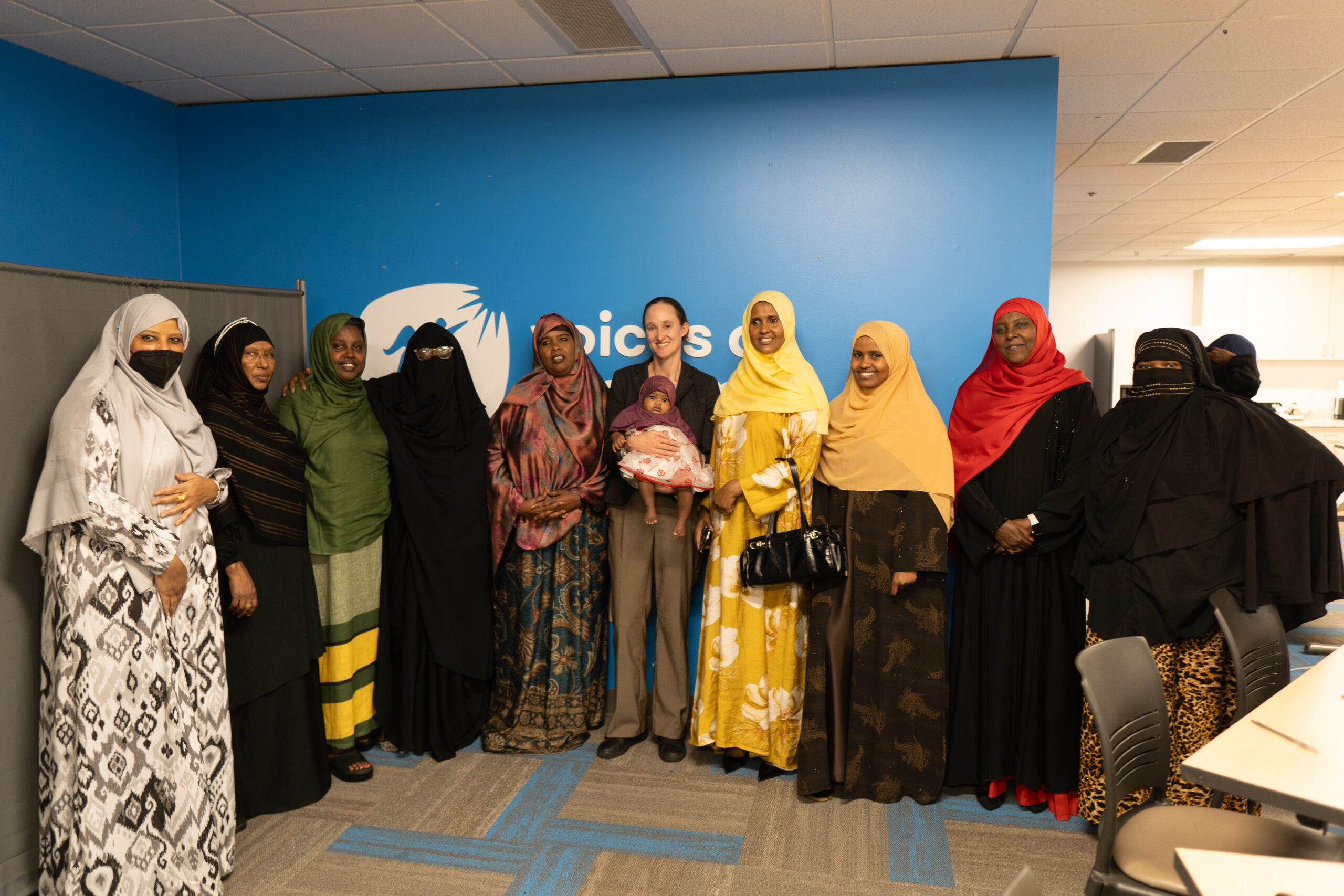
This year, our goal with external advocacy was to champion early learning policies that support families, providers, and equitable access to childcare. We achieved this by collaborating with other organizations such as Washington State Association of Headstart and ECEAP (WSA), Early Learning Action Alliance (ELAA) and Child Care Aware Washington (CCA). Through these collaborations we participated in joining weekly update meetings, attending organization retreats and trainings and building strong connections with the current champions of childcare in Washington. These partnerships strengthened our department and provided us the necessary support and resources to amplify the voices of our community.
In January, VOT participated in lobbying at Advocacy Day 2025 with Child Care Aware Washington. We invited staff, parents, and providers to join us on the steps of the capital to talk about early learning policies and advocate for the support that families and childcare providers need. Our team was able to talk directly with lawmakers to share their stories and changes they want to see on a legislative level. Overall, this experience was invaluable as we were able to amplify our voices to the attention of people who shape the polices in our lives.

Looking Ahead: Policy Priorities for 2026–2027
As head into 2026–2027, the Policy and Advocacy Department will continue centering parent and provider voices by advancing these key VOT policy priorities:
Policy Priorities:
- Early Learning Facility Access (Childcare + Housing): New legislative initiatives to expand access
- Protecting and Restoring Fair Start for Kids Act (FSKA) Funding
- Early Learning Subcontracting Expansion – ECEAP: Support and advocacy
- Mental Health & Behavioral Health Supports: Support and advocacy
- Dual Language & Culturally Grounded Early Learning: Low priority
- Culturally Responsive Workforce Pathways: Support and advocacy
Our Policy Lens:
- Equity for immigrant and refugee families
- Culturally and linguistically responsive early learning systems
- Stabilizing the childcare workforce and provider base
- Community-driven solutions and ownership
- Facilities access that expands childcare capacity
This year has been phenomenal, and we will continue our monthly councils, community forums, and legislative engagement to ensure these priorities reflect the needs of families and providers.

Miiska Anagaa Leh: Sababta Ay U Muhiim Tahay In Laga Maqlo Codka Daryeelayaasha Carruurta ee Muhaajiriinta iyo Qaxootiga — Waqtigan Xaadirka ah
Maalin kasta gobolka Washington, waxaa la gaarayaa go’aanno muhiim ah oo ku saabsan waxbarashada carruurta da’da yar—go’aammo saameynaya maalgelinta, helitaanka adeegyada, shuruucda rukhsadaha, iyo cidda hoggaan u noqon karta nidaamyadaas. Laakiin aad iyo aad bay u badan tahay in daryeelayaasha carruurta ee muhaajiriinta iyo qaxootiga—oo ah laf-dhabarta nidaamka barbaarinta carruurta—aysan ka muuqan meelaha go’aamada lagu gaarayo.
Voices of Tomorrow (VOT) waxay aaminsan tahay in siyaasad kasta oo aan laga qeybgelin dadka ay tooska u saameyneyso aysan waligeed noqoneyn mid cadaalad ah. Sidaas darteed ayaan u bilownay Golaha Talo-bixinta Daryeelayaasha Carruurta—madal si gaar ah loogu talagalay daryeelayaasha muhaajiriinta iyo qaxootiga si ay u hoggaamiyaan, u doodaan, ugana talo bixiyaan arrimaha saamaynaya shaqadooda iyo bulshadooda.
Kursi Miiska Go’aamada—Iyo Awoodda Lagu Qaabeeyo
Golahan ma aha oo keliya matalaad—waa madal lagu beddelayo nidaamyo.
Daryeelayaasha muhaajiriinta iyo qaxootiga ma aha kuwo ku cusub shaqadan—waxaay sanado badan tiir u ahaayeen bulshooyin dhan. Waa macallimiin, waa ganacsato, waa dad ilaaliya sharciga iyo dhaqanka. Waxay bixiyaan daryeel ka tarjumaya qiyamka iyo aqoonsiga qoysaska. Si kastaba ha ahaatee, si nidaamsan ayaa looga saaraa qaabeynta nidaamyada ay maalin walba taageeraan.
Nidaamyo adag oo rukhsad ah, tababar aan loo turjumin, iyo siyaasado aan la jaanqaadin dhaqanka ay la kulmaan maalin kasta— Daryeelayaasha inta badan waxay ku shaqeeyaan nidaam aan iyaga loogu talagalin.

Bulshad Way sii kobcaysaa—Codkeenuna waa inuu la koraa
In ka badan 60,000 muwaadin oo ka soo jeeda Geeska Afrika ayaa maanta ku nool degmada King County oo keliya. Kuwo kale oo kumannaan ah ayaa ka yimid Latin America, Koonfur Bari Aasiya, iyo meelo kale oo dunida ah. Qaar badan waa waalidiin. Qaar badan waa daryeelayaal. Qaar badan ayaa ka shaqeeya barnaamijyo tayo leh oo ku saleysan dhaqanka.
Waxaa jira boqolaal daryeelayaal carruur oo muhaajiriin iyo qaxooti ah kuwaas oo shatiyeysan, kuwaas oo ka shaqeeya gobolka Washington—tiradooduna way sii kordhaysaa. Laakiin haddii waayo-aragnimadooda aan lagu saleyn doodaha iyo go’aamada, siyaasadaha waxbarashada carruurta da’da yar waxay sii ahaan doonaan kuwo cid gaar ah u adeegaya, oo aan caddaalad u ahayn dhammaan bulshooyinka.
Waqtiyada Mugdiga ah, Codkeennu Waa Awooddeena
Iyadoo ay socdaan hadal heyn la xiriirta dhimista miisaaniyadda gobolka ee barbaarinta carruurta, culayska dhaqaale ee sii kordhaya, iyo jahwareerka siyaasadeed—waligeed ma aysan jirin waqti ka muhiimsan in codka bulshada la dhageysto laguna saleeyo go’aamada.Talo ka bixiyaan arrimaha degdega ah ee saameeya noloshooda iyo bulshadooda
- La shaqeeyaan barnaamijyo, adeegyo, iyo wacyigelin si loo gaaro bulshooyin kala duwan
- U doodaan siyaasado cadaalad ah oo ku saabsan maalgelinta, rukhsadaha, iyo taageerada waxbarashada
Dhiseen hoggaan si ay ugu cod yeeshaan meel walba oo go'aan laga gaaro
Arrintani kuma eko ka hortagga jarista barnaamijyada. Waa dib-u-habeyn nidaamka barbaarinta carruurta ee gobolka Washington si uu ugu ekaado bulshadeena—una daboolo rajooyinkeena.
 Golaha Talo-bixinta: Dadaal Dhab ah oo Waqtigiisu yahay hadda
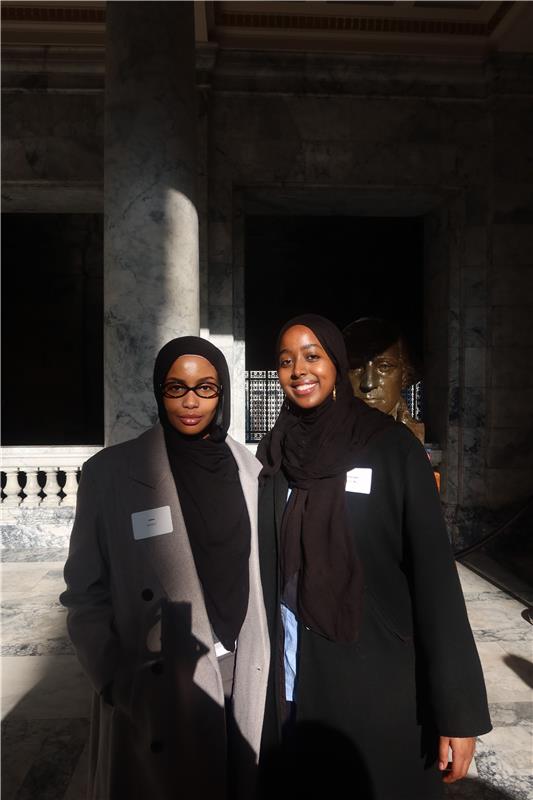
Golaha Talo-bixinta Daryeelayaasha Carruurta waa madal ay daryeelayaasha muhaajiriinta iyo qaxootiga ku:
- Talo ka bixiyaan arrimaha degdegga ah ee saameeya shaqadooda iyo bulshadooda
- Ka shaqeeyaan horumarinta barnaamijyo, wacyigelin, iyo adeegyo dhaqameed ku habboon
- U doodaan siyaasado furan oo la xiriira maalgelinta, rukhsadaha, iyo taageerada waxbarashada carruurta
- Dhiseen hoggaan gudaha bulshada, kana shaqeeyaan wacyigelin lagu gaarsiiyo sharci-dejiyeyaasha, deeq-bixiyeyaasha, iyo dadweynaha
Goluhu wuxuu kulmaa afarta biloodba mar, waxaana jira fursado fogaan-arag ah. Mudada xubinnimada waa hal sano. Waxaa garab taagan Asha Farah (Khabiirka Siyaasadda Guud & Is-dhexgalka Bulshada) iyadoo hageusp, tababaraya, una gogol xaarayso guusha xubnaha golaha.
Kani Maaha Kulan Kaliya—Waa Dhaqdhaqaaq
Golahan ma aha muuq-muuqasho ama magaca kaliya—waa xaqiijin awood iyo ka qaybgal dhab ah. Waa garowsiga in dadka xanaaneynaya carruurteena ay xaq u leeyihiin inay hoggaan ka noqdaan sida loo taageero. In dadka ugu dhow dhibaatada ay yihiin kuwa ugu dhow xalka.
Haddii aad tahay kafaala-qaade ama deeq bixiye—waa waqtiga aad taageerilaheed dadaalkan.
Haddii aad tahay xubin ka tirsan bulshada—waa waqtiga aad dhegaysanlaheed codka daryeelayaasha.
Haddii aad tahay daryeele—waa meesha aad hogaamin karto.
Waxaan Ognahay Baahida Bulshadeena—Waxaan u Baahanahay Kaliya in Codkeena La Maqlo
Daryeelayaasheennu waxay si dhab ah u yaqaanaan waxa ay tahay daryeel la jaanqaadaya dhaqanka, ka jawaabaya dhaawacyada maskaxeed, isla markaana xaqiijinaya muhiimadda luqadda—waayo way la noolyihiin maalin kasta. Golaha Talo-bixinta Daryeelayaashu wuxuu dammaanad qaadaa in xigmaddaas aan kaliya la aqoonsan, balse laga dhigo udub-dhexaadka go’aamada saameeya kumannaan qoys oo ku nool gobolka oo dhan
Aan hubinno in codka daryeelayaasha muhaajiriinta iyo qaxootiga uusan ahayn kaliya mid la maqlo—laakiin uu noqdo aasaaska mustaqbalka waxbarashada carruurta.
Nala soo xiriir halkaan si aad wax uga ogaato Golaha Talo-bixinta Daryeelayaasha:
📧 Asha Farah – [email protected]
The Table Is Ours: Why Immigrant and Refugee Childcare Providers Must Be Heard—Now More Than Ever
Every day in Washington State, decisions are made about early childhood education—about how it’s funded, who has access, how it’s regulated, and who gets to be a part of shaping it. But far too often, immigrant and refugee childcare providers—the very backbone of our early learning system—are missing from those rooms.
At Voices of Tomorrow (VOT), we believe that policies created without the wisdom of those directly impacted will never lead to equity. That’s why we launched the Provider Advisory Council—a bold initiative that brings immigrant and refugee providers together to lead, inform, and influence systems that have long excluded them.
“We’ve been doing the work, but nobody ever asked us what we need.”
A Seat at the Table—and the Power to Shape It
This Council isn’t just about representation. It’s about transformation. Immigrant and refugee providers aren’t new to the work—they’ve been holding down entire communities for decades. They are teachers, small business owners, language holders, and culture bearers. They provide care that reflects families’ values and identities. And yet, they are systematically excluded from shaping the very systems they sustain.
Whether due to licensing systems that disregard cultural practices, trainings that aren’t translated, or policies made without context—these providers often operate in a system built for someone else.
Our Communities Are Growing—So Must Our Voice
Over 60,000 East African immigrants now call King County home, alongside tens of thousands from Latin America, Southeast Asia, and other global communities. Many are parents. Many are educators. Many are running high-quality, culturally grounded childcare programs from their homes.
In fact, there are hundreds of licensed immigrant- and refugee-led family childcare providers across Washington State, and the numbers are growing. But unless their experiences shape the conversation, early learning policies will continue to reflect a narrow, inequitable vision of care.
In Uncertain Times, Our Voice Is Our Power
With proposed state budget cuts to early learning, mounting economic pressures, and ongoing shifts in political will—there’s never been a more critical time to center community voice.
This isn’t just about preventing cuts. It’s about reshaping the future of early learning in Washington to reflect who we really are—and who we want to become.
The Provider Advisory Council: Advocacy in Action
The Provider Advisory Council is a space where immigrant and refugee childcare providers can:
- Advise on urgent issues impacting their work and communities
- Collaborate on program development, outreach, and culturally relevant services
- Advocate for inclusive policies around funding, licensing, and early learning supports
- Build leadership across communities and raise awareness among lawmakers, funders, and the public
Council members meet quarterly (virtually or in person) and serve one-year terms. Members are supported by Asha Farah, Public Policy and Community Engagement Specialist, and Najma Egal, Community Advocacy and Engagement Specialist, who help coordinate and amplify the work of the Council.
This Isn’t Just a Meeting—It’s a Movement
This Council isn’t about tokenism—it’s about agency. It’s about recognizing that the people who care for our children should also help shape the systems that support them. That those closest to the community are closest to the solutions.
- If you’re a funder, this is the work to support.
- If you’re a community member, this is the voice to follow.
- If you’re a provider, this is your place to lead.
We Know What Our Communities Need—We Just Need the Mic
Our providers know what culturally responsive, trauma-informed, language-affirming care looks like—because they live it every day. The Provider Advisory Council ensures that wisdom is not just acknowledged, but centered in decisions that affect thousands of families across the state.
Let’s make sure immigrant and refugee voices are no longer an afterthought—but the blueprint for the future of early learning.
Reach out today to learn more about Provider Advisory Council:
📧 Asha Farah – [email protected]

2025 Eid Carnival Recap
The 2025 Eid Carnival was filled with love, laughter, and that unmistakable Eid joy we all cherish.
The evening kicked off with warm welcomes and festive décor that set the perfect tone. The space was transformed into a vibrant celebration. Guests enjoyed a delicious spread of food, sweet treats, and refreshing drinks that kept everyone smiling throughout the night.
 There was no shortage of fun with interactive carnival games for families, a bouncy house, balloonists, henna, a photobooth and plenty of laughter from the kids. Meanwhile, adults connected over good conversations and warm cups of coffee.
One of the most meaningful moments was seeing people from all walks of life, dressed in their best, coming together to celebrate Eid. It was a beautiful reminder of the strength, unity, and joy within our community.
A heartfelt thank you to our incredible volunteers, vendors, and the wonderful families who joined us. Your energy and support made this celebration truly unforgettable.
We are already looking forward to next year's Eid Carnival. Until then, Eid Mubarak from all of us at Voices of Tomorrow!


Spring Readiness: The Importance of Outdoor Play for Early Childhood Development
Written By: Zahra Mahamud
Spring is finally here! The days are getting longer, the air feels fresher, and little ones are eager to break free from the walls of winter. As we step into this season of renewal, it’s the perfect time to talk about the importance of outdoor play in early childhood development.
For many families, especially in colder climates, the transition from indoor activities to outdoor exploration can feel overwhelming. But the benefits of outdoor play far outweigh the hassle of muddy boots and extra layers. Let’s dive into why it’s essential and how we can support our little ones in making the most of this spring season.
The Benefits of Outdoor Play
Boosts Physical Health
Children need movement to grow strong and healthy. Running, jumping, climbing, and balancing help develop gross motor skills, coordination, and muscle strength. Fresh air and natural sunlight also support vitamin D production, which is crucial for bone health. Plus, outdoor play helps burn energy leading to better sleep (a win for everyone!).
Encourages Social and Emotional Growth
Outdoor play provides endless opportunities for children to practice communication, problem-solving, and teamwork. Whether they’re negotiating turn-taking at the slide or working together to build a sandcastle, these interactions help build confidence, resilience, and cooperation.
Supports Cognitive Development
Nature is the best classroom. Exploring different textures, sounds, and environments stimulates a child’s senses and encourages curiosity. Simple activities like counting rocks, observing insects, or building with sticks lay the foundation for early math and science skills.
Reduces Stress and Enhances Mental Well-Being
Just like adults, children experience stress. Time outside has been proven to reduce anxiety and improve mood. Unstructured play in natural environments allows kids to release energy, regulate emotions, and simply enjoy the moment without the pressures of structured learning.

How to Prepare for Outdoor Play This Spring
Dress for the Weather
Spring can be unpredictable: sunny one moment, rainy the next. Dressing in layers and having waterproof gear on hand ensures that the weather doesn’t limit playtime. Think rain boots, light jackets, and sun hats.
Create Safe and Engaging Play Spaces
Whether it’s a backyard, park, or community space, ensure the area is safe for children to explore. Remove hazards, check for age-appropriate equipment, and encourage open-ended play opportunities.
Follow Their Lead
Children are natural explorers. Sometimes the best thing we can do is step back and let them take the lead. Whether they’re digging in the dirt, collecting leaves, or making up imaginative games, they’re learning in ways we might not immediately recognize.
Make It a Daily Habit
Incorporating outdoor play into the daily routine doesn’t have to be complicated. A walk around the block, a trip to the playground, or even a picnic in the yard can make a big difference. The key is consistency: giving children the time and space to explore the world around them.
Spring is a season of growth, and there’s no better way for young children to experience it than through outdoor play. It’s more than just fun, it’s essential for their development. As caregivers, educators, and community members, we have the opportunity to create environments where children thrive, explore, and embrace the joys of childhood.
So, as the flowers bloom and the temperatures rise, let’s encourage our little ones to step outside, get their hands dirty, and discover all the wonders that spring has to offer.
Let’s make this season one of movement, laughter, and learning one outdoor adventure at a time.
The Hidden History of Black Educators Who Transformed Early Childhood Education
Written By: Zahra Mahamud
Throughout history, Black educators have played a crucial yet often overlooked role in shaping early childhood education. Their work has influenced policies, teaching methods, and advocacy efforts that continue to benefit marginalized and immigrant communities today. At Voices of Tomorrow, we recognize the importance of honoring these pioneers and carrying forward their mission of equitable, culturally responsive education.
The Role of Black Educators in Early Childhood Development

Dr. Edmund Gordon: Architect of Head Start
Dr. Edmund Gordon, a psychologist and educator, was a key figure in the creation of Head Start, a national program that provides early learning opportunities to children from underserved backgrounds. His research emphasized the importance of early childhood intervention in closing achievement gaps, a principle that still guides equitable education efforts today.
Septima Clark: The "Mother of the Movement"
Septima Clark was a trailblazing educator and civil rights activist who founded Citizenship Schools. These schools taught literacy and civic engagement to Black adults, empowering communities through education. Her belief that education is a fundamental tool for social change remains an inspiration for those working to ensure access to quality learning for all children.
How Their Work Laid the Foundation for Today’s Culturally Responsive Education
Many early Black educators championed inclusive curriculums, bilingual education, and parent involvement concepts that are central to Voices of Tomorrow’s mission. They understood that culturally relevant learning environments not only foster academic success but also strengthen community identity. Their work in establishing community-based education models directly parallels modern early learning programs, particularly those serving immigrant and refugee families.

The Impact on Immigrant & Refugee Families
Black educators’ advocacy for equitable education laid the groundwork for today’s bilingual and multicultural learning programs. Their push for culturally affirming education has benefited generations of children, including immigrant and refugee families navigating new education systems. Voices of Tomorrow builds on this legacy by supporting African immigrant families in preserving language, embracing cultural identity, and accessing early learning resources.
What We Can Learn from Their Legacy
Black educators' dedication to the fight for quality education offers invaluable lessons for today’s early learning advocates. Voices of Tomorrow continues this tradition by centering community engagement, representation, and culturally relevant teaching. As we strive to create inclusive and equitable learning environments, we honor those who paved the way and reaffirm our commitment to advocacy, empowerment, and education for future generations.
Their contributions remind us that education is more than a system, it is a means of liberation, opportunity, and community transformation.
References
Gordon, E. W. (1995). Education and social policy: A historical perspective on Head Start.
Clark, S. (1986). Ready from Within: A First-Person Narrative. Wild Trees Press.
Ladson-Billings, G. (1995). Toward a Theory of Culturally Relevant Pedagogy. American Educational Research Journal.
Banks, J. A. (2004). Multicultural Education: Historical Development, Dimensions, and Practice.

Raising Our Voices for Child Care: A Day of Advocacy in Olympia
Written By: Zahra Mahamud
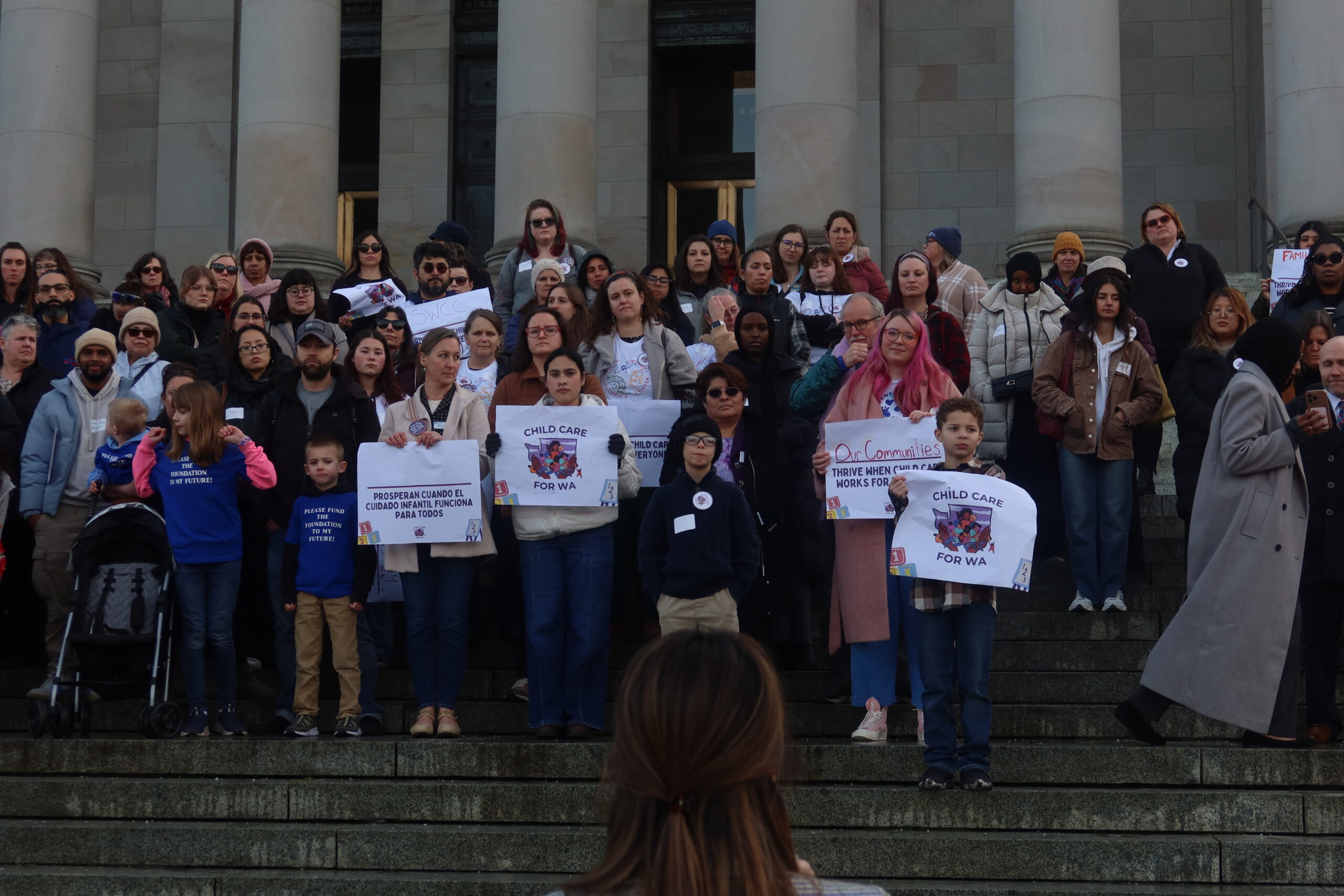
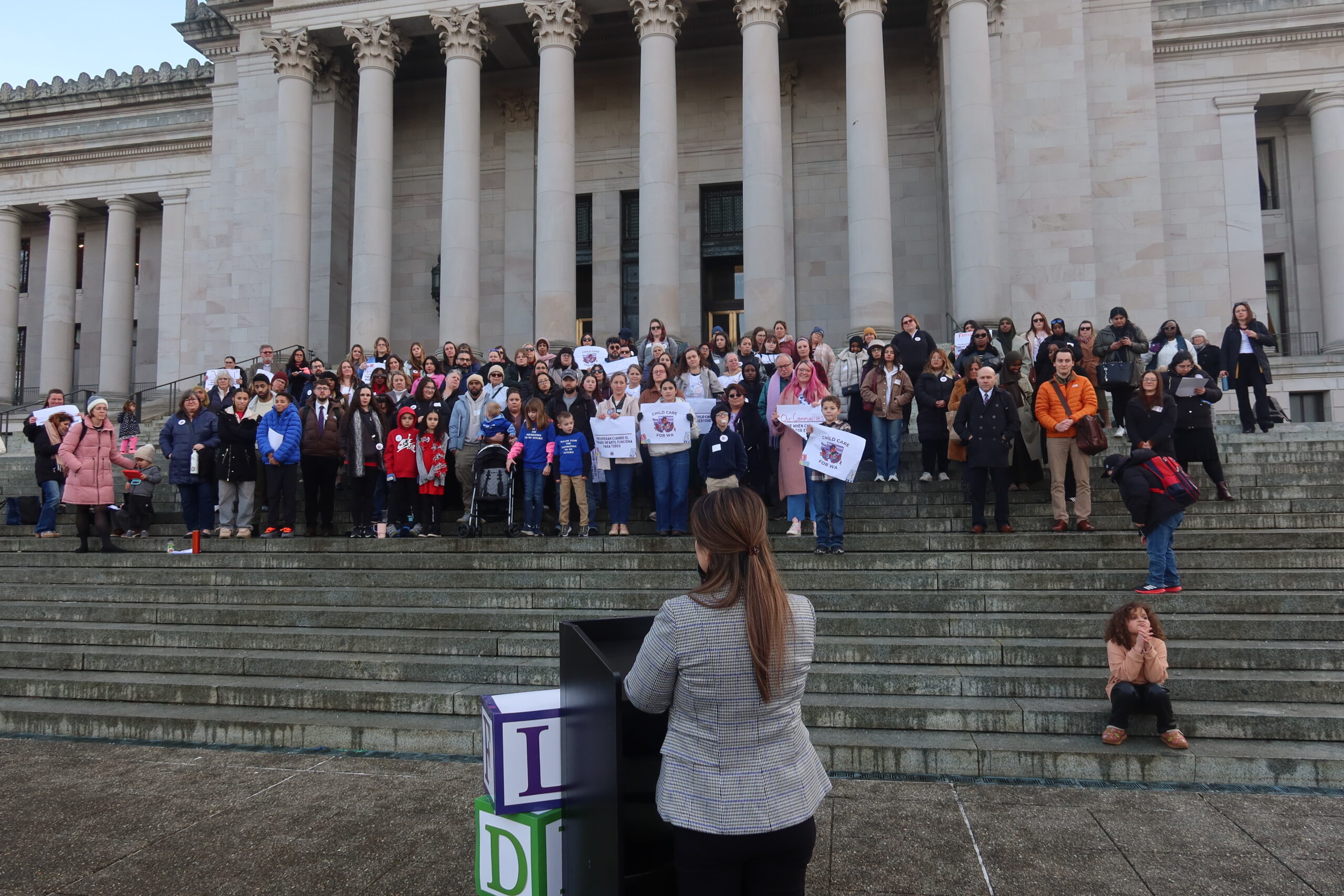
The steps of the Washington State Capitol became a space for community, conversation, and hope as Voices of Tomorrow joined parents, childcare providers, and advocates for Child Care for Washington Advocacy Day to make sure the voices of those most impacted by the childcare crisis were heard.
From the moment we arrived, a deep sense of purpose filled the air. Parents held their children close, providers stood shoulder to shoulder, and stories of struggle and perseverance were shared. This was not just about policy; it was about people. These are families forced to make impossible choices, providers giving everything to this work, and women dedicating their lives to ensuring that every child gets the early learning foundation they deserve.
 Stories That Demand to Be Heard
One of the most powerful moments of the day came when Genevieve Stokes from Child Care Aware Washington shared her journey of navigating Washington’s childcare system. She discussed the financial struggles parents face when trying to afford childcare and how it forces many to leave their jobs. She stated, "Unfortunately, too many parents, including here in the audience, can't afford quality childcare but don't qualify for childcare support. Too many parents are making impossible choices, quitting their jobs and careers to care for their children. I'm looking at the women in the audience who have had to try and figure that decision out, but only to find that they can't manage their family's finances if they don't work."
A provider, Susan Lee, who runs a childcare center, spoke passionately about the challenges childcare providers face. She emphasized her commitment to serving immigrant, refugee, and low-income families and highlighted the financial struggles of running a childcare center. Susan stressed that the state’s Working Connections Child Care (WCCC) subsidy program does not provide enough funding to sustain high-quality early learning programs. She spoke about the sacrifices providers make, often working long hours or taking on additional jobs just to keep their centers running. "Why do we need to continue to be creative and sacrifice our time? Why do teachers continue to need to work a second or third job so that they can continue to provide for their families? That's not right. Our children deserve better, and so do the educators who dedicate their lives to them."
These stories are not isolated; they are the reality for thousands of families and providers across the state. And yet, despite the challenges, there was resilience. There was a collective commitment to keep pushing forward, to keep speaking up, and to keep advocating for a system that works for everyone.
 Why Voices of Tomorrow Stands in This Fight
At Voices of Tomorrow, our mission has always been to support the communities most impacted by systemic barriers. The childcare crisis disproportionately affects women, especially women of color, immigrant families, and working mothers. This fight is not just about affordability or accessibility; it is about equity, about ensuring that every child, regardless of their background, has the opportunity to thrive.
We stand with the parents who refuse to stay silent. We stand with the providers who continue to show up despite the odds. We stand with every advocate who believes that childcare is not a luxury but a necessity.
The Unrecognized Role of Child Care Providers
Throughout the COVID-19 pandemic, childcare providers played an essential yet often unrecognized role in keeping society running. Genevieve Stokes reminded us that while businesses and schools shut down, childcare centers remained open, making it possible for nurses, doctors, emergency responders, grocery store clerks, and other essential workers to do their jobs. These providers put themselves at risk every day, ensuring that families had the support they needed during a time of crisis. Their commitment and sacrifices deserve far greater recognition and investment.
The day in Olympia was a testament to the power of shared stories and collective voices. While no immediate policies were enacted, the conversations held, and the experiences shared were invaluable in building momentum for change. The fight for affordable, high-quality childcare continues, and the dedication of parents, providers, and advocates remains unwavering.
Coming together reaffirmed our commitment to ensuring every child in Washington gains access to the care and education they deserve. The path forward requires persistence, advocacy, and solidarity because when we speak up, we bring about the change that our families and communities need. As the event came to a close, the voices of children rose in unison on the Capitol steps, leading a powerful chant with the support of the audience:
Advocacy Day Chant 🎤 "Every child, every day, deserves to learn, grow, and play!"
Join us. Speak up. Advocate. Because every child deserves a future.

5 Easy Ways Parents Can Support Learning at Home
Written By: Zahra Mahamud
Parents play a vital role in fostering their children’s love for learning, and small actions at home can make a big difference. By creating a supportive learning environment, you can help your child succeed academically while preserving and celebrating their cultural heritage. At Voices of Tomorrow (VOT), we believe that parents are their child’s first and most important teachers. Through advocacy and empowerment, we strive to support families in nurturing learning and cultural pride. Here are five simple ways to support your child’s education at home, both in their native language and in English.
Read Together Daily
Reading with your child is one of the most effective ways to build literacy skills. Choose books in both your native language and English to strengthen your child’s language development in both. This not only boosts vocabulary but also reinforces cultural pride. Make reading a special, consistent part of your daily routine whether it’s bedtime stories or a quiet afternoon activity. VOT encourages families to prioritize literacy at home as a way to deepen cultural connections and foster a lifelong love of learning.
Create a Language-Rich Environment
Encourage learning by exposing your child to a variety of words and phrases in both languages. Label items around your home with words in your native language and in English. For instance, place a label on the refrigerator that says “refrigerator” and its translation. This visual reinforcement helps children expand their vocabulary while maintaining a connection to their heritage. VOT believes that creating bilingual learning environments at home is a powerful way to honor and preserve cultural traditions while supporting language development.
Incorporate Learning into Everyday Activities
Everyday tasks like cooking, grocery shopping, or even doing laundry offer opportunities to teach your child. Practice math skills by counting ingredients or calculating prices at the store. Introduce new vocabulary while preparing meals, naming utensils, or describing actions in both languages. These hands-on, real-world experiences make learning fun and practical. VOT encourages families to see everyday activities as opportunities to inspire curiosity and meaningful engagement in their children.
 Encourage Storytelling and Conversations
Storytelling is a powerful way to develop language skills and nurture creativity. Share stories from your own childhood or cultural traditions and invite your child to tell their own stories. Encourage open-ended conversations in both languages, asking questions that spark curiosity. For example, ask, “What do you think would happen if…?” to encourage critical thinking and problem-solving. At VOT, we believe that storytelling is an essential tool for preserving heritage and fostering strong connections between generations.
Provide Access to Educational Resources
Make learning accessible by surrounding your child with educational tools like books, puzzles, and games in both languages. Use technology wisely by exploring apps and websites designed for bilingual learners. Many resources are available for free or at a low-cost, offering interactive lessons in subjects like reading, math, and science. Additionally, check with your child’s school or local library for bilingual materials and programs. We advocate for equitable access to educational resources and encourage families to explore community tools that promote bilingual learning.
By supporting your child’s learning at home in both their native language and English, you’re helping them build a strong academic foundation while fostering pride in their cultural identity. These simple strategies not only boost learning but also create meaningful connections that benefit your child for years to come. At Voices of Tomorrow, we’re committed to empowering families with ideas and encouragement as they guide their children toward a brighter tomorrow. Remember, your involvement and encouragement are the keys to your child’s success!

10 Children’s Books That Celebrate Diversity and Identity
Written By: Zahra Mahamud
Books have the magical ability to open minds and hearts, especially for children. Stories that celebrate diversity and identity not only help young readers see themselves reflected in the pages but also teach them to value the differences in others. Many beautiful books have been written to honor this mission, showcasing vibrant characters, cultures, and themes that resonate with children of all backgrounds.
At Voices of Tomorrow (VOT), we deeply understand the importance of fostering spaces where children and families can retain their identities while growing in a multicultural society. Stories like these are not just about representation; they are about empowerment, encouraging children to see their worth and inspiring families to celebrate their heritage unapologetically. By reading and reflecting on narratives that honor diversity, families can strengthen bonds and build a sense of pride and confidence that lasts a lifetime.

In The Colors of Us by Karen Katz, young readers are introduced to the spectrum of skin tones, celebrating the unique beauty of every shade. Similarly, Last Stop on Market Street by Matt de la Peña takes readers on a heartfelt journey through a city, revealing lessons about gratitude and finding beauty in everyday moments.
Self-love and family connections take center stage in Hair Love by Matthew A. Cherry, a charming story of a father helping his daughter embrace her natural hair. Ibtihaj Muhammad’s The Proudest Blue: A Story of Hijab and Family shines a light on the strength and pride that comes with wearing a hijab, as told through the eyes of a young girl inspired by her sister.
The complexities of fitting in and staying true to one’s roots are gently explored in The Name Jar by Yangsook Choi, where a young immigrant learns to cherish her cultural identity. In a similar spirit, All Are Welcome by Alexandra Penfold invites readers into a school where every child—regardless of background—is embraced and celebrated.
Grace Byers’ I Am Enough offers an uplifting affirmation of self-worth, encouraging children to see themselves as capable, strong, and deserving. Themes of acceptance continue in We Are All Wonders by R.J. Palacio, a touching reminder that differences make us extraordinary and that everyone deserves kindness.
In Eyes That Kiss in the Corners by Joanna Ho, a young girl learns to appreciate the distinct beauty of her Asian features, connecting her identity to family traditions and heritage. Meanwhile, Going Down Home with Daddy by Kelly Starling Lyons captures the warmth of familial bonds and the joy of celebrating shared history.
These stories remind us that representation matters. They offer children a chance to embrace their own identities while learning to appreciate the richness of the world around them. With their vibrant illustrations and powerful messages, these books inspire empathy, understanding, and a deep appreciation for the diversity that makes each of us unique.
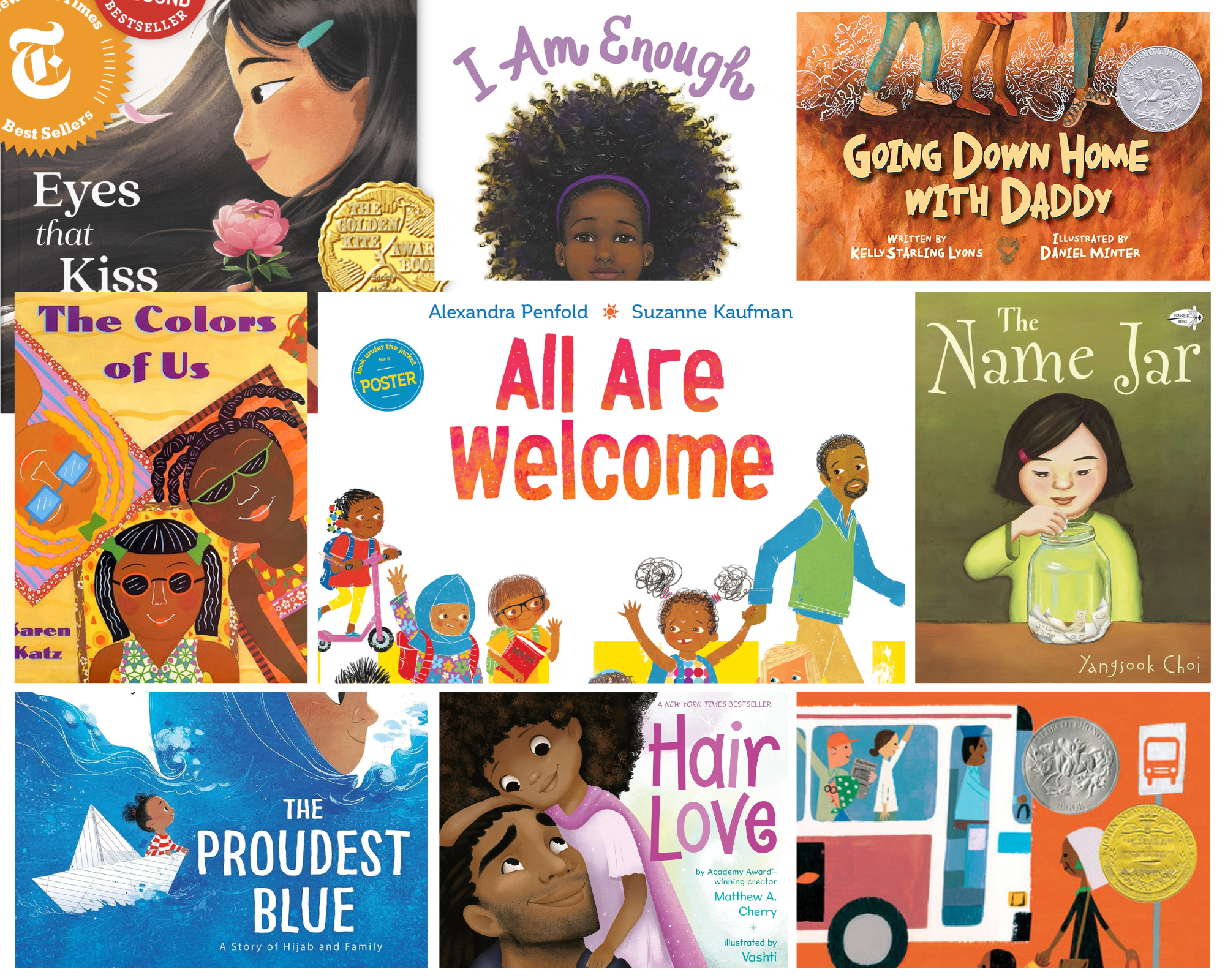
Books in Order:
- The Colors of Us by Karen Katz
- Last Stop on Market Street by Matt de la Peña
- Hair Love by Matthew A. Cherry
- The Proudest Blue: A Story of Hijab and Family by Ibtihaj Muhammad
- The Name Jar by Yangsook Choi
- All Are Welcome by Alexandra Penfold
- I Am Enough by Grace Byers
- We Are All Wonders by R.J. Palacio
- Eyes That Kiss in the Corners by Joanna Ho
- Going Down Home with Daddy by Kelly Starling Lyons